

Your firm knows how to handle complex matters. Finding the right companies to tell about it takes a different kind of work: researching, organising and deciding where your attention belongs.
Prospecting automation for law firms helps prepare that business development work. It brings references together, preserves their sources and supports a consistent review. Your firm retains the judgement: which services to develop, which companies fit and when a next step makes sense.
At Bocau, we are preparing a research-cycle service for law firms. This article explains the approach, what is worth automating and where professional review remains essential.
What to automate in a law firm's prospecting process
Useful prospect research begins well before a message. You need to define the company profile, identify observable facts and document why a reference deserves attention. Automation can reduce repetition in those tasks.
For example: gathering references from agreed sources, standardising company names and domains, flagging duplicates or preparing a record with a date, source link and next review. The result should let you check the reasoning, rather than ask you to trust an opaque score.
An interesting company is not a confirmed legal need
Imagine a commercial law firm that wants to work with expanding businesses. A new office or an announced transaction may justify researching the company’s fit. Neither proves that it needs advice, has no legal adviser or wants to change firms.
For an employment practice, a public job advertisement may provide context about a sector or the scale of an organisation. It does not establish a dispute. In intellectual property, a publicly announced launch may offer business context; it does not replace a rights assessment or specialist registry monitoring.
Separating facts, hypotheses and decisions protects the quality of the research. It also prevents messages from being built around problems nobody has confirmed.
How to define research criteria for your practice
A tax practice, a family law firm and an intellectual property specialist should not receive the same research table. The initial work needs to translate your services into research criteria.
- Practice area and service: what you want to develop and what falls outside the scope.
- Target profile: company type, activity, location and relevant professional contact.
- Signals and sources: which facts justify reviewing a reference and where to verify them.
- Exclusions: existing clients, references already reviewed and situations your firm chooses not to approach.
- Deliverable: the information you need to assess the next step.
For services to individuals, the approach needs to change. Research may focus on professional collaborators or requests expressly published by the people seeking advice. We do not propose building lists around assumed family, criminal or personal difficulties.
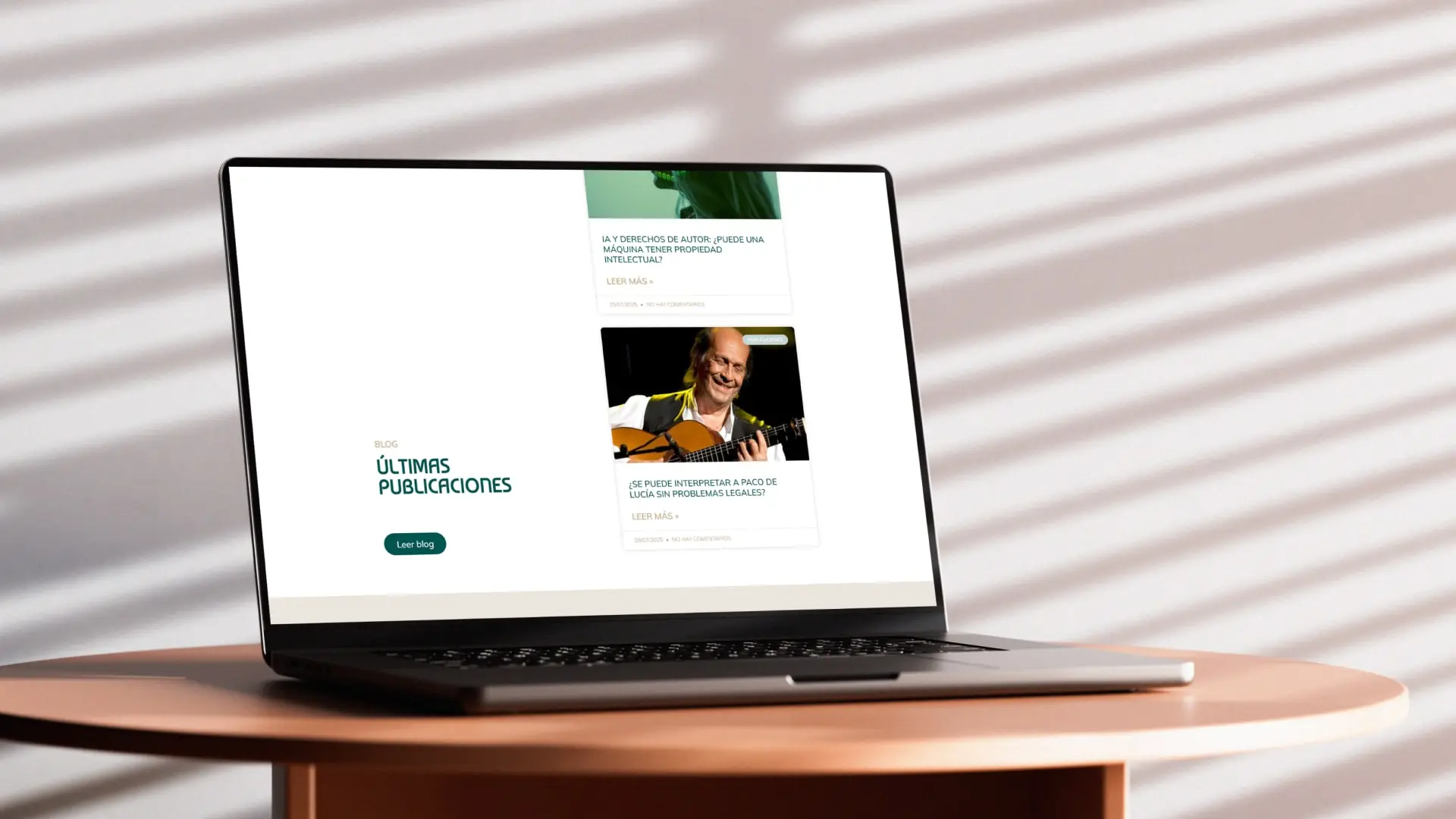
Website project by Bocau for Juan Casulá. The digital presentation of a specialist legal practice.
Where Bocau OS will fit
The workflow we are preparing in Bocau OS is intended to bring together the approved configuration, the focus of each research cycle, documented opportunities and their follow-up. The aim is to preserve context from one round to the next.
The purchase and execution integration for law firms is still in preparation. This is a proposal to assess and configure, rather than a tool you can already buy, connect and leave running on its own.
You can explore the general model on the prospecting setup and research cycles product page. Your firm’s specific scope will be set out in its proposal: sources, research limits, frequency, review and any integrations.
Research, reputation and outreach are separate decisions
Finding a reference does not authorise sending it advertising. Publicly available information does not, by itself, establish whether contact is appropriate. For firms operating in Spain, the official LSSI FAQs explain the conditions for electronic commercial communications.
Before making contact, your firm should review the rules applicable to the channel, its exclusions and potential conflicts. Research should not introduce information from client matters into unauthorised tools.
Your website also plays a role. When someone searches for your name, they should find a clear specialism and a coherent presentation. Our article on SEO for lawyers explores that part of business development.
When commissioning this work makes sense
It is particularly relevant when you have a specific offer for businesses, know what kind of relationship you want to build and can set aside time to review and work with the references. Research cannot compensate for an unclear proposition or a lack of follow-up.
Before commissioning a service, ask to see the delivery structure, acceptance criteria and how references with insufficient evidence will be handled. A round may produce fewer references than expected if the others do not meet the quality threshold. That possibility should be agreed from the start.
At Bocau, we connect strategy, presentation and processes. If you need to coordinate prospecting with your website or tools, we can assess the scope through our business automation and AI service.
The first business development advantage is knowing who deserves your attention.
Frequently asked questions
Does automation bring clients to the firm?
It prepares research and follow-up. It does not guarantee interested contacts, meetings, matters or instructions. Those decisions depend on factors a research process cannot control.
Does the service include automatic outreach?
The proposal described here prepares references and drafts for review. It does not include automated campaigns. Any sending integration requires a separate scope and assessment.
Can we start with one practice area?
That is a useful way to define a pilot: one service, one target profile and clear criteria. The configuration and research cycle are quoted separately.
What should law firms consider under AEPD guidance before automating prospecting?
Researching opportunities is not permission to send advertising. For operations in Spain, the Spanish Data Protection Agency (AEPD) explains that certain professional contact details may be processed on a legitimate-interest basis, subject to purpose and data-minimisation limits. That basis does not, by itself, authorise marketing emails, even when an address is publicly available.
Article 21 of Spain’s LSSI generally requires marketing emails to have been requested or expressly authorised in advance. An exception applies where there is a prior contractual relationship, the contact details were obtained lawfully and the sender promotes its own products or services similar to those previously contracted. A simple, free way to object must be offered when collecting the details and in each communication.
Before activating a workflow, your firm should validate the lawful basis, sources, privacy information, opt-outs and the tools processing the data. Each channel needs its own assessment. Automation does not come with AEPD approval or guarantee compliance. This summary concerns Spain; other jurisdictions require a separate review.
Sources in Spanish: AEPD guidance on professional contact details and Article 21 of the LSSI.
To assess what to commission, read what a prospecting cycle for law firms includes. For the next stage, explore CRM and business development follow-up for lawyers.
To connect your firm’s identity, website and communications, explore our services for law firms (page in Spanish).