
In 1992, Porsche was on the verge of disappearing.
What happened next became one of the richest and most insightful branding case studies in modern business history—not because everything immediately went according to plan, but because the decisions the company made during that crisis reveal, with remarkable clarity, what a brand truly is and how it should be protected when everything else begins to fail.

The Beginning: A Brand Built on Obsession
To understand what Porsche represents today, you first need to understand what it was from the very beginning.
Ferdinand Porsche didn’t set out to build a car company. He built an engineering company driven by a single obsession: making things better than they had ever been before. His philosophy was simple yet radical—deliver maximum performance with the lowest possible weight.
The first Porsche, the 356, was built in 1948 inside a small garage in Austria. It used Volkswagen components—Ferdinand Porsche had designed the Beetle before World War II—but transformed them through an uncompromising pursuit of lightweight engineering and driving performance. It wasn’t the most comfortable or the most practical car.
It was simply the purest driving experience.

That purity wasn’t an accidental design choice. It was a declaration of intent that became the company’s DNA for decades.
When the Porsche 911 arrived in 1963—the model that would define the brand forever—that philosophy evolved into a shape the world would instantly recognize.
Today, the silhouette of the 911 remains one of the most recognizable product designs in automotive history.
Not because it constantly reinvented itself.
Because it evolved with obsessive consistency, preserving its essence while continuously refining its execution.

That is branding in its purest form: a character so consistent that it becomes unmistakable.
The First Great Brand Asset
Motorsport as a Branding Laboratory
Before Porsche became a symbol of status, it became a symbol of performance.
Its participation in motorsport wasn’t a marketing campaign—it was a natural extension of its engineering obsession.
Yet the impact on the brand was extraordinary.
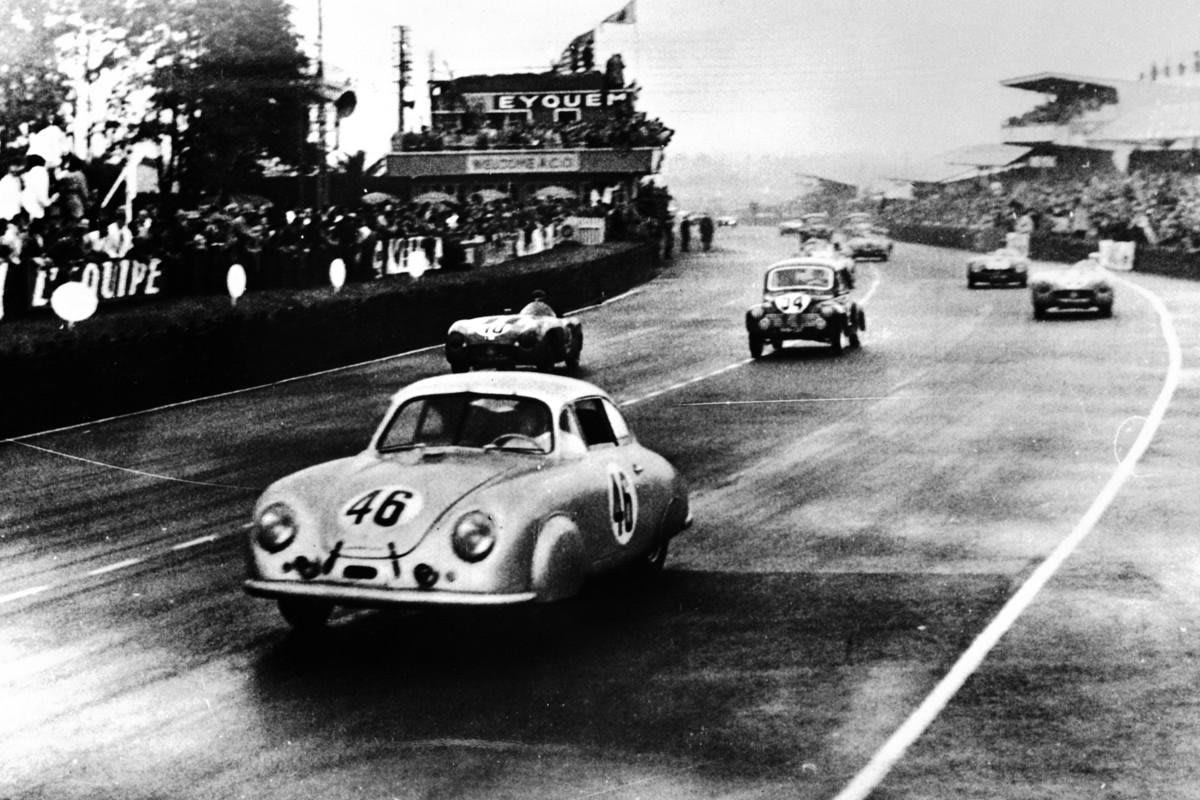
Every Le Mans victory, every Nürburgring record, every championship won across different racing categories added another layer of meaning to the Porsche name—something no advertising budget could ever buy.
Motorsport served both as a laboratory and as proof.
The innovations developed on the track eventually reached production cars.
The victories demonstrated that Porsche’s commitment to performance wasn’t a slogan.
It was reality.
This principle—using real-world performance as evidence of your brand values—is one of Porsche’s greatest branding lessons.
Brands cannot simply claim to stand for something.
They have to prove it.
Porsche proved it every race weekend.
The Crisis of the 1990s: When the Brand Had to Choose
This is perhaps the most instructive moment in Porsche’s entire history.
By 1992, the company was losing money and selling less than half the number of cars it had sold just a few years earlier.
It faced two possible paths.
The first was immediate survival:
Lower prices.
Expand into more affordable market segments.
Reduce quality standards to cut costs.
Dilute the brand to reach a wider audience.
The second path was to protect the brand:
Remain faithful to what Porsche stood for.
Find new ways to grow without compromising its identity.
Protect its positioning—even if that meant making difficult decisions.
Porsche chose the second path.
The decisions made during those years remain a masterclass in brand management under pressure.
The Boxster Decision
The Boxster was the car that saved Porsche from bankruptcy.
Launched in 1996, it offered customers a more accessible entry point into the Porsche universe through a mid-engine roadster.
The key word, however, is accessible—not cheap.
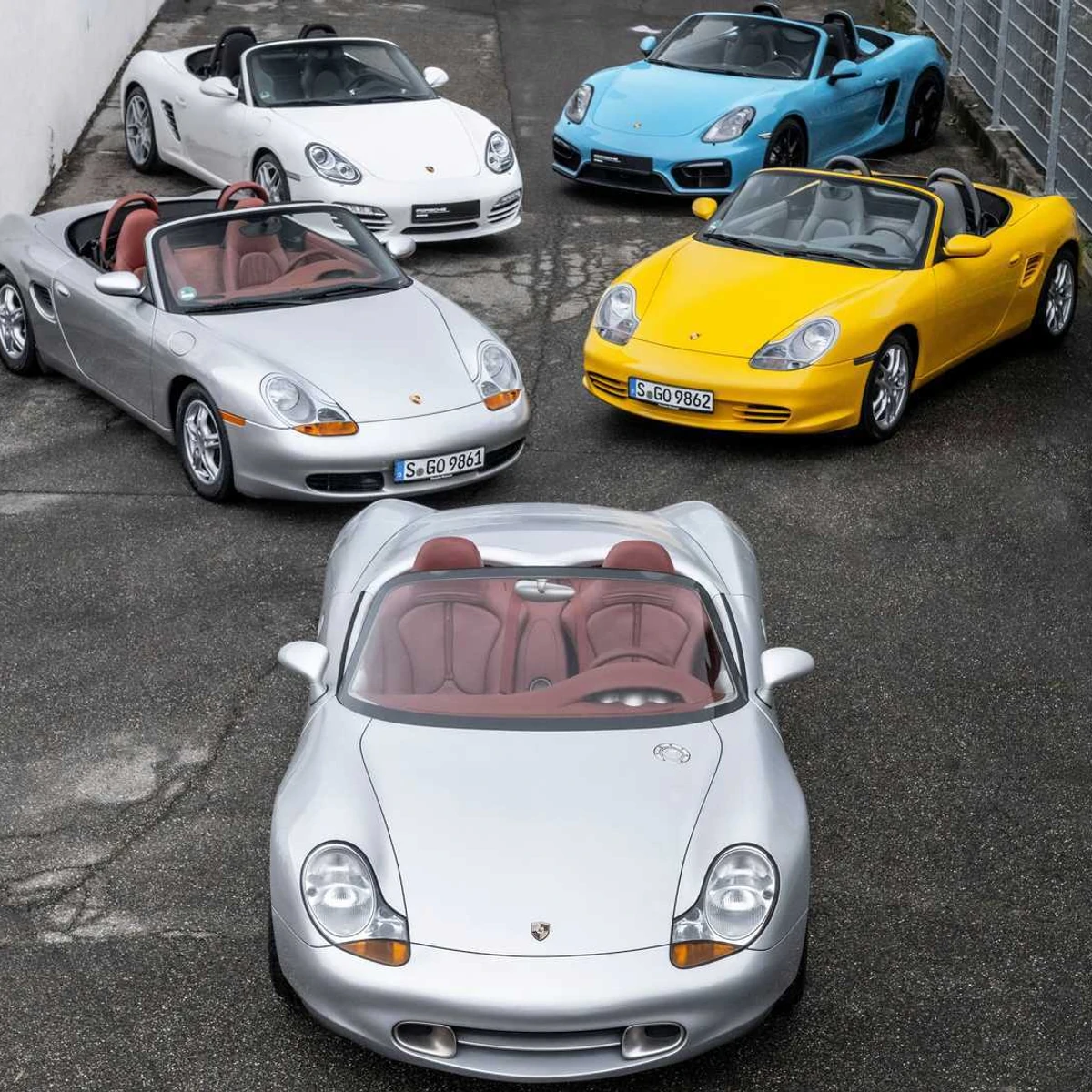
The Boxster wasn’t a compromise.
It was a genuine Porsche, built with authentic Porsche DNA, engineered according to the same principles and quality standards as the 911.
It simply cost less because it was a different car—not because it was a reduced version of a Porsche.
That distinction is fundamental.
Porsche didn’t dilute its brand to survive.
It expanded it consistently.
The Boxster didn’t betray Porsche’s identity.
It expressed it in a different way.
The Cayenne Decision: The Boldest—and Most Controversial

Ferry Porsche predicted it as early as 1989:
“If we build an off-road vehicle that meets our quality standards and wears the Porsche crest on the front, people will buy it.”
When Porsche announced it was going to build an SUV, many enthusiasts were outraged.
To purists, a Porsche SUV sounded like a contradiction.
Porsche built sports cars—not family vehicles for grocery shopping.
The announcement was met with skepticism and criticism from loyal fans who believed an SUV was fundamentally incompatible with Porsche’s sporting heritage.
But Porsche was clear about one thing.
The Cayenne wouldn’t be an ordinary SUV.
It would be an SUV engineered according to exactly the same principles as the 911.
Real performance.
Obsessive engineering.
No compromises where it truly mattered.
During its expansion into the SUV segment, Porsche carefully protected its prestige by maintaining its signature design language, uncompromising performance standards, and premium pricing across the entire lineup.
The gamble paid off.
Sales significantly exceeded the company’s original forecast of 25,000 vehicles per year.
During its first eight years on the market, the Cayenne averaged nearly 35,000 global sales annually.
By the end of the 2000s, the Cayenne—and later the Macan—accounted for more than half of Porsche’s worldwide sales, providing the financial foundation that allowed the company to continue building the sports cars that made it famous.
The irony couldn't have been greater. The SUV that many purists hated became the very reason the Porsche 911 continued to exist.
The 911: The Symbol That Can't Change Too Much
While the Cayenne and the Boxster allowed Porsche to grow in volume, the 911 served a completely different—but equally critical—purpose: it became the guardian of the brand’s identity.
The Porsche 911 is perhaps the greatest example of consistent product evolution in automotive design history.
From 1963 to the present day, every generation has remained unmistakably a 911.
Its silhouette.
Its rear-engine layout.
Its driving philosophy.
Everything has evolved alongside technology, yet no generation has ever rejected the one that came before it.
That isn’t nostalgia.
It’s strategy.

Porsche understood that the strength of its brand continued to depend on the perception and desirability of its sports cars—even if SUVs eventually outsold them.
The 911 doesn’t need to be Porsche’s best-selling model to justify its existence.
It exists to be the lighthouse.
The permanent reminder of what Porsche represents in its purest form.
When someone buys a Cayenne, they know there’s also a 911 in the family.
That changes the way they perceive the Cayenne.
It’s an extraordinarily sophisticated example of brand architecture: using the purest product in the portfolio as the perception anchor for every other product.
"There is no substitute".
One of the Most Honest Brand Positionings Ever Created
For decades, Porsche has defined itself with one simple statement:
“There Is No Substitute.”
It’s a tagline worth analyzing.
It doesn’t claim Porsche is the best.
It doesn’t say it’s the fastest.
Or the most luxurious.
Or the most exclusive.
Instead, it says something far more powerful.
If you want what Porsche offers, there is no alternative.
That is category-of-one positioning.
You aren’t competing with anyone because nobody occupies exactly the same place in the customer’s mind.
Naturally, that raises another question.
What is it that only Porsche can offer?
The answer, built over decades, is difficult to describe but instantly recognizable once experienced:
A unique balance of performance, everyday usability, racing heritage, and timeless design that no other manufacturer has ever replicated in quite the same way.
You don’t claim something like that.
You prove it—year after year.
What Every Brand Can Learn From Porsche
Porsche’s story isn’t about unlimited resources or extraordinary luck.
It’s about absolute clarity regarding what the brand stands for—and the courage to protect that clarity during difficult times.
The lessons are remarkably practical.
Identity Is a Promise, Not a Description
Porsche never promised, “We build sports cars.”
It promised a certain level of engineering excellence and performance.
That promise can be fulfilled through many different products.
Crises Reveal Character
Financial pressure reveals a brand’s true character.
Porsche could have lowered prices, compromised quality, and survived as a weaker version of itself.
Instead, it chose to protect its identity.
Expansion Isn’t Dilution—If It’s Done Correctly
At first glance, the Cayenne looked like a betrayal.
In reality, it was a perfectly coherent brand extension.
The difference lies in whether a new product continues to honor the brand’s core promise.
Flagship Products Matter as Much as Best Sellers
The Porsche 911 doesn’t need to be the company’s highest-selling vehicle to be its most important.
It exists to safeguard what Porsche stands for.
Consistency Over Time Is a Brand’s Greatest Asset
Today, Porsche is one of the most profitable automotive companies in the world.
That isn’t the result of a single brilliant campaign or one revolutionary product.
It’s the outcome of decades of consistent decisions that have built a perception no competitor can replicate overnight.

Today, Porsche’s brand value exceeds the combined value of all its physical assets.
Its factories.
Its production equipment.
Its inventory.
All of those have measurable value.
Its brand is worth significantly more.
That difference—the gap between the value of the individual parts and the value of the whole—is precisely what branding creates.
For more than seventy years, Porsche has been building that intangible space through obsessive consistency and the courage to protect its identity—even when the market demanded otherwise.
The result isn’t simply one of the world’s most desirable cars.
It’s one of the most valuable brands ever created.
The Question Every Brand Should Ask
ou don’t need to manufacture luxury sports cars for Porsche’s story to matter.
The question Porsche had to answer during its darkest years is exactly the same one every business eventually faces:
When you have to choose between what’s convenient and what’s consistent, which one do you choose?
The answer to that question—repeated over years—is what ultimately builds or destroys a brand.
At Bocau, We Build Brands With That Kind of Clarity
Brands that know exactly who they are.
Brands that have the courage to embrace their identity.
Brands that make decisions that remain true to what they stand for.
If that’s the kind of brand you want to build, we’d love to hear your story.